.png)

EHS (Environmental, Health, and Safety) management software is a centralized digital platform that helps organizations manage safety programs, compliance requirements, risk mitigation, and incident reporting across multiple locations or job sites. Instead of relying on spreadsheets, paper forms, or disconnected systems, companies use EHS software to streamline safety workflows, automate reporting, and maintain real-time visibility into performance metrics.
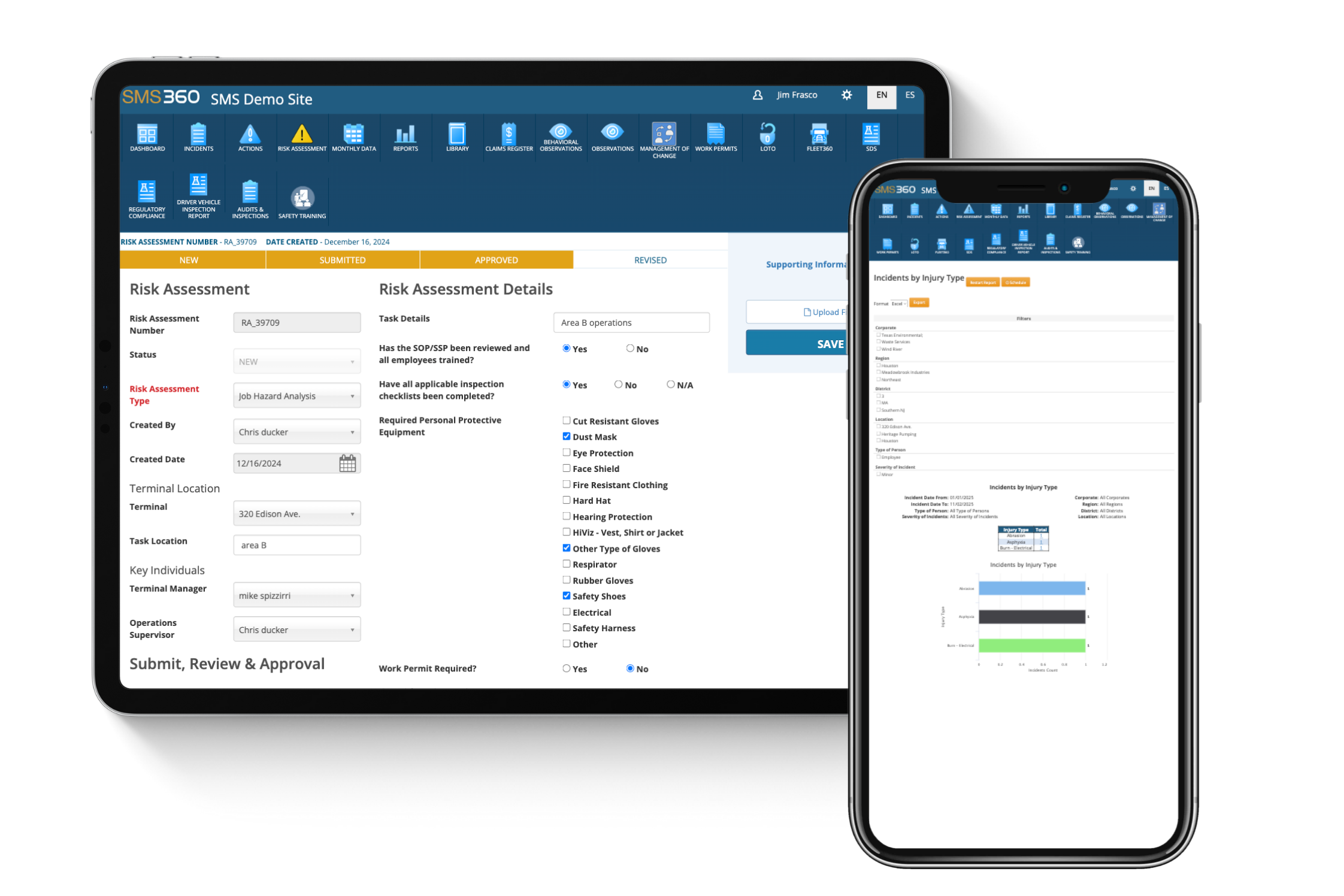
For organizations managing fleets, field teams, contractors, or distributed operations, an EHS platform like SMS360 provides structured processes for inspections, incident documentation, corrective actions, safety training tracking, and regulatory reporting. This reduces manual administrative work while strengthening accountability and consistency across teams.
By digitizing safety operations, companies can proactively identify trends, monitor leading and lagging indicators, and address hazards before they escalate into costly injuries, violations, or operational disruptions. Over time, this improves overall safety culture, compliance confidence, and financial performance.
EHS software improves compliance by standardizing documentation, automating reminders, and creating clear audit trails for regulatory requirements. Whether organizations must comply with OSHA, DOT, EPA, or internal corporate policies, having a centralized system ensures nothing slips through the cracks.
Instead of scrambling during audits, companies can quickly generate reports that show inspection histories, corrective actions, employee training records, equipment certifications, and incident investigations. Automated alerts help safety managers track expiring licenses, overdue actions, and required inspections, reducing risk exposure.
This structured approach minimizes the likelihood of fines, penalties, and legal liabilities while improving transparency across departments and leadership teams.
Modern EHS platforms are designed for practical implementation without disrupting daily operations. With SMS360, onboarding typically involves configuring workflows, importing existing safety data, and training administrators and end users.
Cloud-based deployment eliminates the need for complex infrastructure, and intuitive dashboards allow supervisors and field teams to quickly adopt the system. Mobile accessibility is especially critical for field-based organizations, ensuring employees can submit reports and complete inspections in real time.
A well-implemented EHS software solution becomes part of daily operations rather than an added burden, driving faster adoption and measurable safety improvements.
Yes. Mobile capability is essential for companies with field operations, fleet drivers, construction crews, utility workers, or distributed job sites. SMS360’s EHS functionality enables employees to complete inspections, submit incident reports, upload photos, and document hazards directly from their mobile devices.
This real-time reporting eliminates delays associated with paper forms or end-of-day data entry. Supervisors receive immediate visibility into issues, allowing them to initiate corrective actions faster and prevent recurring hazards.
Mobile accessibility also increases participation in safety programs, strengthening overall engagement and accountability across the workforce.
EHS management software delivers return on investment by reducing workplace injuries, minimizing regulatory penalties, lowering insurance costs, and improving operational efficiency. By identifying risk patterns early and tracking corrective actions consistently, organizations can prevent incidents before they escalate into costly claims or downtime.
Centralized reporting also saves administrative hours by automating documentation and consolidating safety data into actionable dashboards. Leadership teams gain visibility into performance metrics that support smarter budgeting, resource allocation, and strategic planning.
Over time, the combination of reduced incident costs, improved compliance posture, and stronger safety culture creates measurable financial and operational value for the organization.